
Reverse-Seared Ribeye
Slow oven first, hard sear last. Even color edge to edge, and a crust that doesn't overcook the middle.
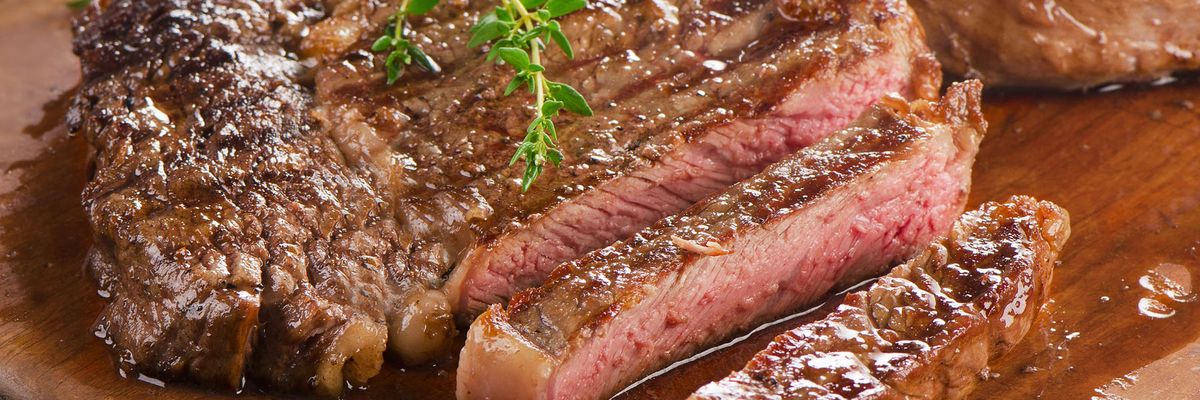
The usual way to cook a steak is sear first, then finish. That's fine for a 1-inch steak. On a thick one, by the time the center hits medium-rare, there's a gray band of overcooked meat just under the crust. The reverse sear flips the order. A low oven brings the whole steak up slowly and evenly, and dries the surface while it's at it. Then a minute or so a side in a very hot pan builds the crust, and you're done before the heat can work its way in.
You need a thick steak for this, at least 1½ inches and ideally 2. Any thinner and there isn't enough oven time to matter, so just sear it.
Ingredients
- 2 ribeye steaks, 1½ to 2 inches thick (about 1 to 1½ lb each), bone-in or boneless
- Kosher salt, about ¾ teaspoon per pound of steak
- Freshly ground black pepper
- 1 tablespoon neutral oil with a high smoke point (canola, avocado, peanut)
- 2 tablespoons unsalted butter (optional)
- 3 garlic cloves, lightly crushed (optional)
- 2 sprigs fresh thyme or rosemary (optional)
Gear: a rimmed baking sheet with a wire rack, a heavy skillet (cast iron or carbon steel), and a thermometer. A leave-in probe with an alarm is perfect for this.
Pull temperatures
| Doneness | Pull from the oven at | Final after sear and rest |
|---|---|---|
| Rare | 105–110°F | 120–125°F |
| Medium-rare | 115–120°F | 130–135°F |
| Medium | 125–130°F | 135–145°F |
| Medium-well | 135–140°F | 145–155°F |
The sear adds roughly 10–15°F, which is why the oven pull looks so low. Rare, medium-rare and medium all finish under USDA's 145°F minimum for beef, so those are your call. If you want 145°F with a 3-minute rest, use the medium-well row.
Steps
- Salt early (optional, but worth it). Salt the steaks all over. If you have time, set them on the rack over the baking sheet and stick them in the fridge, uncovered, overnight or up to 24 hours. The salt seasons deeper and the surface dries out, which helps the crust. No time? Salt them right before they go in the oven.
- Heat the oven to 250°F. Pepper the steaks and set them on the rack over the baking sheet. Slide a leave-in probe in from the side to the center of the thickest steak, away from the bone.
- Roast low until you hit the pull temperature. For medium-rare, that's 115–120°F. A 1½-inch steak usually takes 35 to 45 minutes from the fridge, a 2-inch steak 45 to 60 minutes, but start checking at 30. Check both steaks; they won't finish at exactly the same time.
- Heat the pan. About 10 minutes before the steaks are ready, put the skillet over high heat. Add the oil when the steaks come out of the oven. It should shimmer and just start to smoke.
- Sear hard and fast. Lay the steaks in the pan, away from you. Sear 60 to 90 seconds, flip, and sear another 60 to 90 seconds. Use tongs to stand each steak on its fat edge for 30 seconds or so to render it.
- Baste (optional). For the last 30 seconds, drop the heat to medium, add the butter, garlic and herbs, tilt the pan, and spoon the foaming butter over the steaks.
- Check and rest. Confirm the final temperature with an instant-read in the center of each steak. Rest 5 minutes on a board. Since the oven brought them up so gently, reverse-seared steaks don't need a long rest, and they carry over less than steaks seared first.
- Slice and serve. Slice against the grain and hit it with a little more salt.
Why it works
Low oven heat warms the steak with almost no gap between the outside and the center, so the whole thing reaches the same doneness at once. The oven also dries the surface. A wet steak can't brown until the water on its surface boils off, so a dry one starts building crust the second it hits the pan. That's why a 60-second sear here does what takes 3 or 4 minutes on a raw steak.
If something goes wrong
- It blew past your pull temperature in the oven. Shave a few seconds off the sear, or sear one side only, and call it the next doneness up. It'll still be evenly cooked, and nobody has to know.
- The pan smoked a lot. That's normal at this heat. Turn on the fan, crack a window, and use a high-smoke-point oil for the sear itself. Save the butter for the baste.
- No crust. The pan wasn't hot enough or the steak was wet. Pat it dry when it comes out of the oven, and give the pan a full 10 minutes on high.
- You only have thin steaks. Skip the oven. Sear over high heat and flip every minute until you're about 5°F under your target.